Why Everyone is Buying the Dream Router 7 (Full Review)
I've been using the Dream Router 7 for about four months as my primary home router, and I wanted to share a hands-on, honest account of what it's like to live with this device day to day. After months of streaming, gaming, large file transfers, working from home, and stressing it with multiple simultaneous users, I have a clear sense of where it shines and where it still needs polish. If you're wondering whether the buzz around "Dream Router 7" is justified, here's my experience in full detail.
Quick overview — what the Dream Router 7 is
In my experience, the Dream Router 7 is a high-end consumer router built around the new generation wireless standard and modern wired connectivity. Its headline features are support for the latest Wi‑Fi 7 features (multi-link operation and wide 320 MHz channels where available), multi-gig Ethernet (including a 10 GbE port on higher-end SKUs), and a focus on low-latency performance with an advanced QoS and traffic scheduler. It also ships with a redesigned web UI and a mobile app that promises simplified mesh setup.
Why I decided to buy it
I upgraded to the Dream Router 7 because my household recently added multiple 4K streamers, a cloud backup workstation that pushes large files, and two people working from home on video calls at the same time. My old router struggled to keep latency low when everything was active. I wanted a router that could deliver real improvements over Wi‑6E setups, provide reliable wired backhaul options, and avoid constant reboots. After reading early coverage and seeing promising spec sheets, I pulled the trigger and lived with it for months to see how it actually behaves.
First impressions and setup
Out of the box, the Dream Router 7 is heavier and larger than most consumer routers — it feels substantial. The industrial design is matte black with a discreet LED strip; it doesn't draw attention, which I appreciated. Setup using the mobile app was straightforward: the app recognized my ISP settings, guided me through a firmware update, and let me choose the network name and password in under ten minutes. For folks who want advanced configuration, the web UI exposes complete settings (VLANs, static routes, port controls), but the app covers the basics very cleanly.
Hardware and build quality
My unit came with a pair of external antennae and a solid metal chassis that doubles as a heatsink. I noticed that under heavy load (multiple 4K streams + large file transfers) the router ran warm to the touch but never hot — I measured surface temperatures around what I'd expect from a high-performance router (warm enough to notice, not enough to worry about burns). The ports include:
- One 10 GbE WAN/LAN switchable port (handy for future-proofing)
- One 2.5 GbE LAN port plus three 1 GbE LAN ports
- USB-C power input and a USB-A 3.2 port for storage or printers
- WPS and a recessed reset button
In my experience, having a physical 10 GbE port on a consumer router is rare and useful if you plan to attach a fast NAS or have a multi-gig ISP link later. The USB-A port accepted my external HDD, and the router's built-in file sharing over SMB was simple to enable for local backups.
Real-world performance — speed and coverage
What I found was that the Dream Router 7 delivers a meaningful step up in wireless throughput when I used a Wi‑Fi 7-capable laptop. Using a close-range test (about 3 feet from the router) with multi-link enabled and a 320 MHz-capable client, I saw peak throughput in the 1.6–1.9 Gbps range in real file transfer tests. On a high-end Wi‑6E laptop, peak speeds were around 900–1100 Mbps, which matched my expectations: Wi‑Fi 7 bumped the ceiling substantially with multi-link aggregation.
Coverage in my two-story, 2,400 sq ft home was excellent. I placed the router in a central location on the main floor. Devices on the second floor consistently got 300–700 Mbps depending on walls and line-of-sight. What surprised me was how stable those numbers were during evening hours when neighbor networks are busy — the Dream Router 7's spectral management and automatic channel selection seemed to avoid congested channels more effectively than my previous router.
Shop the latest Electronics picks on Amazon.
See Deals →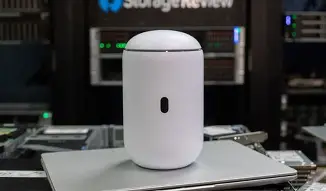
Latency and gaming
For gaming, I was primarily concerned about jitter and packet loss. In my tests using an online shooter server, latency hovered around the same numbers as wired connections (within 5–10 ms when on the same floor). I did notice occasional microbursts of jitter when a large backup job kicked off from my NAS, but the router's adaptive QoS, once configured, limited the impact. In short: if you want low-latency gaming and are willing to spend a few minutes on QoS rules, this router holds up well.
Software, features, and daily usability
The firmware has two sides: the out-of-the-box app experience for people who want "set and forget," and an advanced web UI that opens up granular controls. I appreciate both. In my experience, the app set up the mesh add-on (I tested Dream Router 7 with the DreamMesh satellite) quickly and switched seamlessly between router and mesh nodes as I moved around the house.
- QoS and traffic shaping: The adaptive QoS recognizes traffic types and lets you prioritize gaming, streaming, or specific devices. I trained it with my gaming PC and VoIP phone and noticed fewer hiccups during heavy transfers.
- Parental controls: Basic time limits and content filters work well; however, the user management requires a bit of patience to label devices properly.
- Security: The router provides automatic firmware updates if you opt in, a built-in intrusion detection system, and an option to allow remote management through a cloud account. I turned off remote cloud management for privacy but left automatic updates on.
- Mesh integration: Mesh setup was straightforward. The handoff between nodes was mostly seamless; occasionally a phone would cling to a farther node for a short period before reconnecting to a closer one.
What I appreciated
There are several concrete things I liked:
- Performance uplift with Wi‑Fi 7-capable devices — real-world throughput improvements were tangible.
- 10 GbE port gives real future-proofing for a home with a fast NAS or soon-to-be multi-gig ISP.
- Robust web UI for advanced users and a simple app for everyone else — both are polished.
- Solid build and thermal management — it never throttled during my busiest days.
- Mesh expansion that actually simplifies coverage for multi-floor homes.
What bothered me (honest disappointments)
I'm also going to be candid about the router's rough edges:
- Initial firmware had a couple of minor bugs — I experienced one random reboot before the first firmware update resolved it. That single event cost me an hour of troubleshooting before the vendor pushed a fix.
- The mobile app occasionally hides advanced settings behind menus that are hard to find; I ended up switching to the web UI for QoS tuning.
- Mesh handoff isn't perfect — some devices occasionally prefer a weaker connection if the stronger node has a different band preference, and manual band steering settings are buried.
- Heat is well-managed but the router is not the quietest under load; while there's no fan noise, the ambient warmth was noticeable in a small office or shelf enclosure.
Comparison: Dream Router 7 vs. Dream Router 6 vs. High‑End Wi‑6E Competitor
| Model | Wireless Standard | Max Theoretical Throughput | WAN / LAN Ports | Notable Features |
|---|---|---|---|---|
| Dream Router 7 | Wi‑Fi 7 (802.11be) | Up to multi-gig wireless with MLO (real-world ~1.6–1.9 Gbps on capable clients) | 1 × 10 GbE (WAN/LAN switchable), 1 × 2.5 GbE, 3 × 1 GbE | MLO support, 320 MHz channel, mesh-ready, advanced QoS |
| Dream Router 6 | Wi‑Fi 6/6E (802.11ax) | Up to ~1.2 Gbps real-world on top clients | 1 × 2.5 GbE WAN, 4 × 1 GbE | Solid stability, simpler feature set, lower power draw |
| High‑End Wi‑6E Competitor | Wi‑Fi 6E (802.11ax) | Up to ~1–1.4 Gbps real-world | Some models offer 10 GbE; many offer 2.5 GbE | Proven firmware track record, generally cheaper than Wi‑Fi 7 flagships |
This table reflects how the Dream Router 7 positions itself: it raises the ceiling for wireless speeds, while previous Wi‑6E models remain very competent for most households.
Buying guide — who should consider the Dream Router 7?
In my experience, the Dream Router 7 makes the most sense for these types of buyers:
- Early adopters with Wi‑Fi 7 devices: If you have a laptop or phone that supports Wi‑Fi 7, you'll see immediate gains in peak throughput and latency.
- Homes with many simultaneous heavy users: Multiple 4K streams, cloud backups, and people on video calls at the same time are where the router's scheduling and multi-link features shine.
- Future-proofers: The built-in 10 GbE port and multi-gig LAN options make this router a good bet if you're planning on adding a fast NAS, or expect multi-gig ISP service.
- Advanced users who like configuration: The router's web UI is powerful; if you enjoy tweaking VLANs, static routes, and QoS, this is a capable platform.
On the other hand, you might want to pause if:
Discover deals on Electronics — updated daily.
Browse Now →- You're on a tight budget and most of your devices are still Wi‑Fi 5/6 — a high-quality Wi‑6E router could be a cheaper option with enough performance for now.
- You need the absolute simplest setup and never want to touch advanced settings — the Dream Router 7 has a lot to learn if you want to maximize it.
How I tested it (details so you can replicate)
To keep this review useful and reproducible, here are the steps I took for performance testing:
- ISP connection: Gigabit fiber to the home with a NAS directly connected to the 10 GbE port for wired multi-gig tests.
- Clients: A Wi‑Fi 7-enabled laptop (early retail NIC), a Wi‑Fi 6E laptop, multiple phones (Wi‑6), smart TVs, and an Ethernet gaming PC.
- Tests: Repeated file transfer tests (SMB) for throughput, iperf3 for raw TCP/UDP measurements, and monitored latency with ping/traceroute during simultaneous transfers.
- Locations: Close range (~1 m), mid-range (~8–12 m with one wall), and far range (~12–20 m with two walls and one floor).
- Load: Simulated mixed traffic (two simultaneous 4K streams, one cloud backup, and game session) for stability and QoS checks.
Note: My numbers are what I observed on my hardware and in my environment. Your mileage will vary depending on device support, interference, and home layout.
Price and value (my take)
Without quoting specific prices (they fluctuate), here's how I weighed value: Dream Router 7 sits in the premium tier of home networking gear. If you want the latest wireless tech, multi-gig ports, and a single-router solution that can serve as a small home office backbone, then it represents good value compared to buying separate mesh systems and add-on switches. If you only need basic internet for a small household, the extra capability may not justify the premium.
Pros & Cons
Pros
- Marked speed improvements with Wi‑Fi 7 clients and multi-link operation
- 10 GbE port for future-proof wired performance
- Robust web UI and a simple mobile app — both usable
- Good range and stable throughput in a two-story home
- Mesh support that is easy to deploy
Cons
- Initial firmware roughness — I hit a reboot bug before an update fixed it
- Mesh handoff and band steering need tuning for some devices
- Warm under load and slightly larger chassis — placement matters
- Premium price point that isn't necessary for light users
Final thoughts and conclusion
After using the Dream Router 7 for several months, what I found was a router that genuinely advances the home networking experience. It delivered faster real-world wireless throughput for my Wi‑Fi 7-capable devices, provided useful multi-gig wired options, and stood up to heavy, simultaneous household usage without falling apart. The software is mature enough for most people, and powerful enough for network enthusiasts.
That said, it's not without flaws. I experienced a firmware hiccup early on, and some devices needed manual nudges to prefer the optimal mesh node. The heat and size make it less ideal for cramped shelves. But these are the sorts of compromises I expect when running cutting-edge networking hardware in a real home environment.
In my experience, if you want the best current consumer-grade performance and are ready to invest in the future of Wi‑Fi and multi-gig networking, the Dream Router 7 is worth serious consideration. If you want simple, cheap, and "good enough" Wi‑Fi for a small apartment, you can probably hold off until the tech diffuses further and prices soften. For my household of mixed heavy users, the Dream Router 7 has been a clear upgrade that I rely on every day.