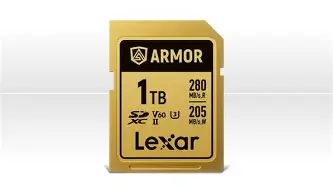
The Ultimate Showdown: Amazfit Helio Strap vs Lexar Armor Gold Sdxc Uhs Ii 1Tb Card for 2026
On the surface, pairing a wearable like the Amazfit Helio Strap with a storage accessory such as the Lexar Armor Gold SDXC UHS-II 1TB Card may seem like a mismatch. Yet in 2026 both items represent essential accessories for modern mobile lifestyles: one focused on health, convenience and connectivity; the other on capacity, speed and data reliability. This article examines each product in detail, compares their strengths and trade-offs for common real-world scenarios, and offers a practical buying guide so prospective buyers can choose what best aligns with their priorities.
Introduction: Why compare two very different accessories?
Accessories shape how devices are used. A fitness strap transforms a smartwatch or fitness tracker into a personal health assistant, influencing daily routines and long-term wellness tracking. A high-capacity UHS-II SD card expands the storage and workflow capabilities of cameras, drones and select devices, enabling longer shoots and faster offloads. The comparison is not about which is objectively “better” but about which provides greater value for specific needs in 2026 — whether the priority is health insights, content creation speed, data safety, or overall convenience.
Product deep-dive: Amazfit Helio Strap
Overview and design
The Amazfit Helio Strap is positioned as a comfortable, sensor-rich wearable band intended to complement a smartwatch or function as a lightweight, dedicated fitness device. Design choices emphasize low weight, breathable materials, and magnetic or quick-release closures for easy swapping. A modern aesthetic and a choice of finishes make the strap suitable for both workouts and casual wear.
Key features and capabilities
- Sensor integration: The strap commonly integrates heart-rate sensors, temperature or skin-contact sensors, and sometimes additional biometric modules to offload some sensing from the host device.
- Battery and power behavior: As an accessory, the strap usually draws minimal power but can affect the host device’s battery when it actively transmits data or powers independent sensors.
- Connectivity: Bluetooth LE is the typical link for data exchange with companion apps; some straps also pair over proprietary protocols for lower-latency telemetry.
- Compatibility and ecosystem: The strap is intended to interoperate with Amazfit devices and many third-party watches, supported via the manufacturer’s companion app and standard fitness platforms.
- Durability: Water resistance and sweat-proof materials make the strap suitable for gym sessions, running, and pool use in many cases.
Real-world use cases
For runners, the strap’s continuous heart-rate monitoring and lightweight form factor reduce chafing and improve comfort on long runs. For hybrid workers and commuters, discreet health reminders and stress metrics can nudge healthier daily habits. For those who prioritize sleep analysis, a soft strap that supports overnight wear is valuable. Photographers and videographers benefit indirectly: accurate activity tracking helps manage energy and recovery during long shoots or travel days.
What buyers typically care about
- Comfort for all-day and overnight wear
- Sensor accuracy and data sync reliability
- Compatibility with the existing watch/device and ecosystem
- Material quality and skin sensitivity
- Replacement band pricing and availability
Product deep-dive: Lexar Armor Gold SDXC UHS-II 1TB Card
Overview and design
The Lexar Armor Gold SDXC UHS-II 1TB Card is built for high-capacity, high-throughput storage. UHS-II cards include a second row of pins for faster bus communication, enabling substantially higher peak transfer rates than UHS-I cards. The “Armor” branding signals reinforced build quality: ruggedized casing, shock and vibration resistance, and performance aimed at professional imaging workflows.
Key features and capabilities
- Capacity: 1TB provides ample room for multi-hour 4K/8K video recording, burst-mode RAW sequences, and extensive photo libraries.
- Interface and speed: UHS-II interface enables higher sustained read/write performance, benefiting continuous shooting and quick buffer clearing. Manufacturers typically rate top-end cards for high sequential reads and robust writes to support video recording.
- Durability and reliability: Rugged housings, error management, and sometimes limited warranties target professional users who demand data integrity in adverse conditions.
- Compatibility: While UHS-II is backward compatible with UHS-I slots, full UHS-II speeds require compatible host devices and card readers.
Real-world use cases
Wedding photographers encounter long days of continuous shooting where rapid buffering and large capacity reduce downtime between sessions. Drone operators capturing high-bitrate 6K or 8K footage need stable sustained writes to avoid dropped frames. Hybrid shooters who record both stills and videos appreciate a single media card that accommodates varied workflows. Videographers benefit from fast read speeds that accelerate offloads to editing systems.
Discover deals on Electronics — updated daily.
Shop Amazon →What buyers typically care about
- Sustained write performance for long video takes
- Compatibility with cameras, drones and card readers
- Failure modes and warranty / data-recovery options
- Physical robustness for field use
- Price per gigabyte and long-term value
Pros & Cons
Amazfit Helio Strap
- Pros:
- Comfort-oriented design suitable for all-day wear
- Enhances biometric data collection without replacing an entire watch
- Lightweight and often water-resistant
- Improves long-term wellness and fitness tracking consistency
- Cons:
- Sensor accuracy depends on fit and placement
- Compatibility limitations with non-Amazfit devices may exist
- Additional accessory cost for users who already own capable devices
- Periodic replacement may be necessary for materials that degrade with sweat and sun exposure
Lexar Armor Gold SDXC UHS-II 1TB Card
- Pros:
- Massive 1TB capacity suitable for professional workflows
- UHS-II speeds reduce transfer times and clear camera buffers faster
- Rugged construction reduces risk of physical damage in the field
- Single-card workflows simplify media management for hybrid shoots
- Cons:
- Higher price compared with lower-capacity or UHS-I cards
- Full performance requires UHS-II compatible hosts and readers
- Data loss risk persists without backups despite rugged design
- Large capacity cards can complicate recovery if corruption occurs
Comparison Table
| Attribute | Amazfit Helio Strap | Lexar Armor Gold SDXC UHS-II 1TB Card |
|---|---|---|
| Primary purpose | Wearable health and activity sensor | High-capacity, high-speed removable storage |
| Form factor | Wrist strap / band | SD card (standard size) |
| Key buyer concern | Comfort, accuracy, ecosystem fit | Capacity, sustained write speed, reliability |
| Durability | Water/sweat-resistant materials; replaceable | Rugged casing; shock and vibration-resistant |
| Compatibility | Designed for Amazfit devices; may work with third-party watches | Backwards compatible with UHS-I; UHS-II speeds need compatible host |
| Typical users | Runners, fitness enthusiasts, health-conscious commuters | Photographers, videographers, drone pilots, content creators |
| Value proposition | Enhances daily wellness and monitoring | Speeds workflows and prevents bottlenecks in data-heavy shoots |
Buying guide: Choosing based on real needs in 2026
1. Clarify primary goals
Decide whether the immediate need is health and convenience or storage and performance. For someone aiming to improve activity tracking, sleep and stress monitoring, a well-designed strap that improves sensor contact and comfort can be transformational. Conversely, content creators and professionals who handle high-bitrate footage or large photo bursts will see more tangible returns from a high-capacity UHS-II card.
2. Check device compatibility
For the strap: confirm compatibility with the existing smartwatch or phone ecosystem and verify that the companion app supports the desired metrics. For the SD card: verify that cameras, drones, and card readers support UHS-II for best performance; otherwise, the card will fall back to lower speeds.

3. Prioritize the metrics that matter
- Wearables: Sensor accuracy, skin contact, battery implications, and material comfort.
- Storage: Sustained write performance, read speed for offloads, and real-world sustained throughput under load rather than only peak figures.
4. Consider workflow and redundancy
For creatives, a single 1TB card reduces swapping but increases the stakes in case of corruption — a backup strategy remains essential. For health users, consider how data is backed up to cloud services or exported for long-term tracking; a strap that syncs reliably and preserves historical data delivers more value.
5. Durability and environmental tolerance
Buyers who work outdoors should prioritize ruggedness: water resistance and materials that stand up to sweat, dust and temperature swings. For storage, look for rated shock, water and X-ray resistance if shooting in variable conditions.
6. Evaluate total cost of ownership
Accessories often incur hidden costs: replacement bands, storage card cases, or higher-tier cloud subscriptions for synced wearable data. Compare the initial price with expected lifespan and secondary costs like backup drives, additional batteries, or device adapters.
Discover deals on Electronics — updated daily.
Shop Amazon →7. Warranty, support and data services
Warranty terms for both categories matter. For storage media, longer warranties and strong manufacturer support can mitigate replacement worries. For wearables, timely firmware updates and active app development ensure long-term functionality and improved accuracy over time.
How these two items fit into daily life in 2026
In 2026 the interplay between personal health and content creation has never been closer. A photographer on a multi-day assignment might rely on the Helio Strap for sleep tracking and recovery insights while depending on a Lexar Armor Gold card to capture uninterrupted footage. A traveler who documents trips with a mirrorless camera benefits from the Lexar card’s capacity while keeping health metrics and step counts aligned with itinerary demands via the strap. For consumers focused on minimalism, the decision becomes a question of which accessory unlocks more value per dollar for their lifestyle.
Practical tips for getting the most from each purchase
Amazfit Helio Strap
- Ensure a snug but comfortable fit to maximize sensor accuracy, especially during vigorous exercise.
- Rotate between straps if allergic reactions or material degradation appear; silicone or textile options can mitigate skin irritation.
- Keep companion apps updated to benefit from ongoing sensor calibration and analytics improvements.
Lexar Armor Gold SDXC UHS-II 1TB Card
- Format the card in-camera before use to reduce the chance of file system issues.
- Adopt a 3-2-1 backup strategy: keep at least one copy on a separate physical drive and one in the cloud.
- Use a compatible UHS-II reader to realize full transfer speeds during backups.
- Label and catalog cards to avoid overwriting critical sessions and to streamline media ingestion.
Conclusion
Neither the Amazfit Helio Strap nor the Lexar Armor Gold SDXC UHS-II 1TB Card is a universal replacement for the other; they serve distinct but complementary roles in a modern, mobile-centric life. The Helio Strap adds meaningful value to daily wellness and activity monitoring through comfort and sensor integration. The Lexar Armor Gold card is a workflow multiplier for creators who require high capacity and dependable throughput. For those who must choose, the decision should align with the primary pain point: improved health insights and wearability, or high-speed, high-capacity media storage and reliability. For many professionals and enthusiasts in 2026, the ideal outcome is to own both — each solving different problems and together enabling a smoother, more capable digital lifestyle.