A Professional's Take on the New Crusher Evo Wireless
Introduction
The Crusher Evo Wireless arrives as a polarizing entry in the crowded over-ear headphone market: not because it seeks to be all things to all people, but because it doubles down on a very specific promise — tactile, room-shaking low end delivered alongside competent wireless convenience. This review examines the Crusher Evo Wireless from a professional, usage-oriented perspective. It looks beyond marketing copy to evaluate real-world performance: fit, sound, bass haptics, app functionality, battery life, call quality, and how it stacks up against the features buyers typically prioritize when selecting over-ear wireless headphones.
Product Overview
The Crusher Evo Wireless is built around two ideas: traditional transducer-driven audio and a separate haptic bass system that produces low-frequency sensations you feel as much as hear. Skullcandy positions the model for listeners who enjoy bass-forward genres (EDM, hip-hop, certain types of pop and video-game audio) and who want an immersive sensation without external subwoofers. It also targets casual users who want an uncomplicated mobile listening experience: wireless pairing, on-device controls, and a companion app for personalization.
Key characteristics at a glance
- Primary appeal: Adjustable sensory bass that supplements the audio signal.
- Design focus: Over-ear closed-back with relatively large ear cups and substantial padding for passive isolation.
- Target use cases: Home listening sessions, commuting (in noisy environments where bass carries), gaming, and media consumption where tactile impact is desirable.
Design and Build
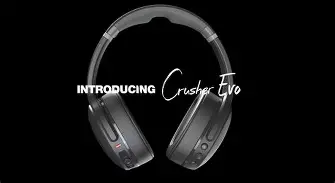
On first handling, the Crusher Evo Wireless feels solidly aimed at everyday durability rather than ultralight portability. Materials combine soft-touch plastics with dense padding. The headband cushion and ear pads are thick, which yields good passive isolation and a plush feel for extended listening sessions. The clamping force is moderate; it balances stability with comfort, but users with very small or very large heads should test for fit.
Controls are physically prominent: playback, volume, and the sensory bass slider (where present) are straightforward to use without looking. The build quality does not attempt premium luxury — there are visible seams and textured plastics — but the construction is practical and engineered for frequent use.
Comfort and Fit
Comfort is a relative outcome for over-ear headphones. In the Crusher Evo Wireless, padding minimizes pressure points and allows long sessions of music or gaming with only minimal fatigue for many users. The ear cups are large enough to cover most ears fully, reducing on-ear heat compared with smaller pads. The trade-off is bulk: these are not the most travel-friendly headphones for tight carry spaces.
Sound Signature and the Sensory Bass Experience
At its core, the Crusher Evo Wireless presents a warm, bass-forward sound signature. Mids and highs are serviceable — clear enough for vocals and general listening — but the personality of the headset is the low end. The sensation is produced by both the main transducers and a separate haptic bass driver. The haptic element transmits physical vibrations to the cups and skull, creating an extra layer of perception.
How this translates to real-world enjoyment depends on the listener’s goals:
- If the priority is analytical listening, studio work, or neutral reference monitoring, the Crusher Evo Wireless is not a match. The bass emphasis colors the sound and can obscure fine detail.
- For casual listening, gaming, cinematic content, and bass-heavy music, the haptic feedback adds a visceral impact that many users find immersive and entertaining.
Importantly, the haptic bass is adjustable. A companion app provides a slider or discrete levels to balance the tactile intensity against the audio output. Setting the haptics too high overwhelms the mix and can induce fatigue over long periods; at moderate settings, it enhances rhythm and punch without masking mids.
Tuning and Tonal Balance
In both neutral and bass-elevated modes, the midrange is present but slightly recessed compared with neutral studio headphones. Treble is competent but not exceptionally detailed; aggressive, sibilant tracks can sound less airy. For its intended audience, the trade is acceptable: the product is optimized for fun and physicality rather than clinical accuracy.
App and Customization
The Skullcandy companion app is a pragmatic tool: it offers EQ presets, a custom equalizer, and control over the intensity of the haptic bass. For users who like to adjust sound profiles quickly, the app provides familiar convenience. EQ changes apply in real time; presets give easy starting points for different genres.
Discover deals on Audio & Headphones — updated daily.
See Deals →A useful feature is the ability to personalize the Crusher Evo Wireless sound to listening preferences. However, buyers should note the app experience varies with platform and updates — checking current app behavior before purchase is recommended.
Connectivity and Battery Life
Wireless performance in day-to-day use is solid: pairing is straightforward, and range is sufficient for typical apartment or office environments. The headphones support standard Bluetooth wireless modes and maintain stable connections for media playback over usual distances without frequent dropouts.
Battery life is one of the practical metrics buyers care about. The Crusher Evo Wireless provides extended runtime suitable for several days of commuting or continuous media consumption at moderate volumes. When running low, rapid charging provides a useful top-up so brief waits yield several hours of playback. In real-world usage, users can expect predictable endurance for long flights, study sessions, or multi-shift listening cycles.
Microphone and Call Quality
Call performance is functional but not exceptional. The onboard microphone picks up voice adequately for standard phone or video calls in quiet environments. In noisy outdoor conditions, voice clarity degrades: background energy and wind interference can intrude. Buyers who prioritize professional-level call performance should compare microphone performance against dedicated headsets or models that emphasize noise reduction and external mic arrays.
Durability and Everyday Use Cases
For day-to-day use, the Crusher Evo Wireless is engineered to survive repeated handling and routine transport. The design handles household drops and being stowed in backpacks. With normal care, the foam and padding hold up well, although frequent exposure to sweat or moisture without cleaning will accelerate wear.
Real-world use cases where the Crusher Evo Wireless excels:
- Home entertainment: movies and video games with emphatic low-frequency events benefit greatly from the haptic feedback.
- Casual listening: people who enjoy strong, physical bass and want to feel the rhythm.
- Commuting in noisy environments: passive isolation and impactful bass help content cut through background noise.
Use cases where buyers should consider other models:
- Studio monitoring and music production: the colored bass response limits neutral assessment.
- Frequent air travel where active noise cancellation (ANC) is required: the Crusher Evo Wireless does not prioritize ANC, so travelers seeking aggressive noise reduction should compare ANC-equipped competitors.
Pros & Cons
Pros
- Strong, adjustable sensory bass that delivers a tactile listening experience.
- Comfortable ear pads and headband suitable for extended sessions.
- Simple, accessible controls and an app that provides useful EQ customization.
- Solid battery life with fast-charge capability for quick top-ups.
- Practical build quality designed for everyday handling.
Cons
- Sound signature is bass-centric; not suited to listeners seeking a neutral reference sound.
- No strong active noise cancellation compared with some competitors, limiting use in very loud environments.
- Microphone performance is adequate but can struggle in noisy, windy conditions.
- Bulkier form factor reduces pocketability and adds weight in travel carry.
Comparison Table
| Model | Primary Strength | Sensory Bass / Haptics | ANC | Battery (typical) | Best for |
|---|---|---|---|---|---|
| Crusher Evo Wireless | Physical, adjustable low-end impact | Yes — tactile haptics | No / limited | Extended — multi-day usage | Casual listeners, gaming, movies |
| Premium ANC Competitor | Noise cancellation and balanced tuning | No | Yes | Long — similar class | Frequent travelers, office work |
| Neutral Reference Headphones | Studio accuracy and detail | No | Varies | Varies | Critical listening, production |
Buying Guide: What to Consider Before Choosing Crusher Evo Wireless
When evaluating whether the Crusher Evo Wireless is the right purchase, a few practical considerations separate a satisfying experience from buyer’s remorse. Below is a buyer-centric checklist and guidance aligned with what people typically care about.
1. Identify how you listen
Does the listener prioritize accuracy or entertainment? The Crusher Evo Wireless is engineered for enjoyment and physical sensation. If one’s library is dominated by bass-heavy music, film soundtracks, or games, the sensory bass adds value. For critical listening (mixing, mastering), neutral headphones are a better match.
2. Consider noise environments
If commuting on loud trains, nightly flights, or open-plan offices are frequent, weigh how important active noise cancellation is. The Crusher Evo Wireless relies primarily on passive isolation from its pads and cup design. If ANC is a must-have, look at models that explicitly emphasize noise-cancelling performance.
Discover deals on Audio & Headphones — updated daily.
Shop Amazon →3. Comfort and fit testing
Over-ear headphones are subjective in comfort. Try them for an hour if possible. Pay attention to clamping force, pad material, and whether ear cups sit fully around the ears. Those with spectacles should check for pressure on the temples.
4. Battery and rapid-charge needs
Consider typical session lengths: daily commuters may need long runtimes without frequent charging; occasional users may prefer a fast-charge feature for short replenishments before trips. The Crusher Evo Wireless provides both extended runtime and quick top-ups, which suit varied schedules.
5. App and personalization
Some users want to tweak EQ and haptic intensity; others prefer set-and-forget simplicity. If customization is a priority, test the companion app experience and confirm it offers the granularity desired (EQ bands, preset management, haptic level control).
6. Call quality and microphone needs
Professionals who take many calls should prioritize microphone clarity and environmental noise filtration. The Crusher Evo Wireless handles everyday voice calls adequately, but those requiring crisp voice pickup in noisy conditions should compare models with multi-mic arrays and stronger wind/noise suppression.
7. Durability and warranty
Check warranty terms and return windows before buying, and consider whether the headphone will see rugged use. Routine cleaning of pads extends lifespan; if sweat or heavy use is expected, look for more water-resistant or serviceable padding options.
8. Price-to-value evaluation
Compare the Crusher Evo Wireless to alternatives by balancing features rather than price alone. If the haptic experience is central to the buyer’s enjoyment, the value proposition strengthens. If ANC, minimalism, or ultra-compact design rank higher, another model may represent better value for that user.
Practical Tips for Use
- Start with moderate haptic levels and increment slowly to avoid fatigue; what feels impressive for five minutes can be tiring for four hours.
- Use EQ presets to tame overly boomy tracks or emphasize vocals when watching dialogue-heavy content.
- For long flights, pair the Crusher Evo Wireless with a secondary ANC solution if silence is required during sleep — the haptics are immersive but not a substitute for ANC.
- Keep the ear pads clean and dry after heavy use; replace them when padding degrades to preserve fit and isolation.
Conclusion
The Crusher Evo Wireless carves a clear niche: it is a headphone for listeners who want to feel the beat as much as hear it. In environments and use cases where visceral bass is a feature — gaming, action movies, club-oriented music — the model delivers an experience that is distinct from conventional headphones. Comfort, app-based personalization, and reliable battery life add to its practicality for everyday use.
However, buyers who need neutral sound, strong active noise cancellation, or professional-grade microphone performance should assess alternatives that focus on those strengths. The Crusher Evo Wireless is not a one-size-fits-all headphone; it is a deliberately opinionated design that prioritizes enjoyment and impact over clinical neutrality. For the right user, it does exactly what it promises and does it with gratifying force.